
Annual vet cost
£400–£800
Lifespan
12–16 years
Size
Medium
Health risk
High
Species
Cats
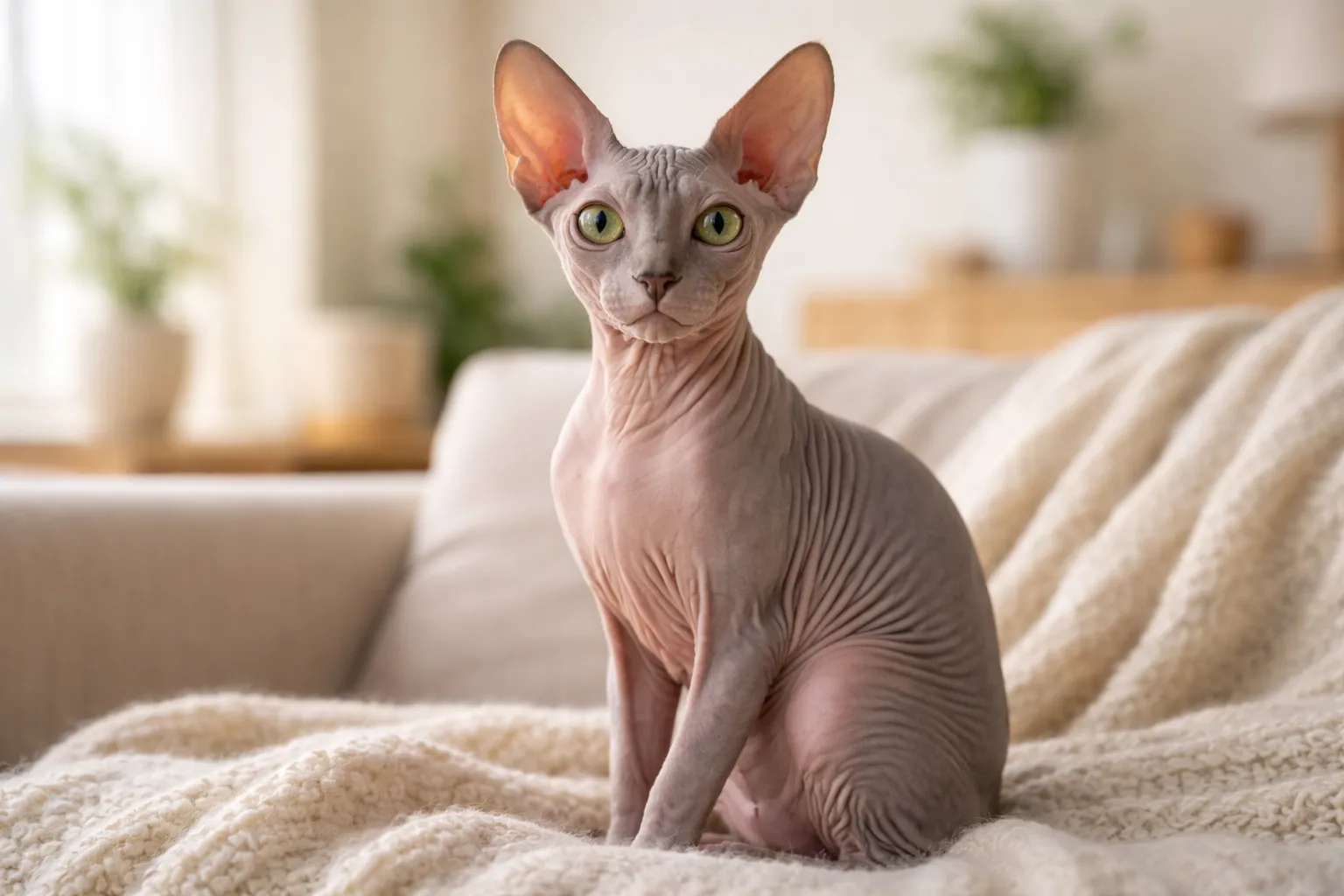
Sphynx cats require significantly more veterinary attention than most breeds due to their unique hairless physiology. Their lack of fur means their skin is directly exposed to environmental irritants, UV radiation, and temperature extremes, leading to a range of chronic skin conditions. Excessive oil production necessitates weekly bathing, and their ears produce copious wax that needs regular cleaning to prevent infections. Hypertrophic cardiomyopathy is the breed's most serious health concern, with a higher prevalence than in most other breeds — annual echocardiogram screening is strongly recommended. Dental disease is another significant cost driver. Sphynx also have higher metabolisms to maintain body temperature, meaning they eat more than comparably sized cats. Insurance premiums are among the highest for any cat breed.
Typical vet costs for a Sphynx
| Treatment | Average cost | Notes |
|---|---|---|
| Annual Health Check | £35–£65 | Recommended annually; heart and skin assessment essential |
| Flea Worm Treatment | £60–£120 per year | Monthly preventive treatment; still needed despite hairlessness |
| Dog Dental Cleaning | £150–£350 | Under general anaesthesia; Sphynx are prone to dental issues |
| Allergy Treatment | £200–£600 per year | Skin conditions and sensitivities are common in hairless cats |
| X Ray | £150–£400 | May be needed for respiratory assessment or heart screening |
Costs vary by location, practice, and your cat's individual needs. London and the South East are typically 20–40% higher.
Common health problems in Sphynxs
Sphynx cats have a high prevalence of hypertrophic cardiomyopathy (HCM), making regular echocardiogram screening essential. HCM can be asymptomatic for years before causing sudden heart failure, so annual screening from age one is strongly recommended.
Typical treatment cost: £800–£3,500
Without fur to protect their skin, Sphynx cats are highly susceptible to skin conditions including urticaria pigmentosa, sunburn, acne, and fungal infections. Regular bathing is needed to remove oil build-up, and skin issues often require ongoing veterinary treatment.
Typical treatment cost: £200–£1,000 per year
Sphynx cats produce excessive ear wax due to the absence of hair in the ear canal. Without regular cleaning, this leads to frequent ear infections that require veterinary treatment with medicated drops.
Typical treatment cost: £100–£400
Sphynx cats are disproportionately affected by dental disease, including gingivitis and tooth resorption. Multiple professional dental cleanings and extractions are often needed over their lifetime.
Typical treatment cost: £300–£1,500
Lifetime vet cost estimate
Estimated lifetime vet spend for a Sphynx
£8,000–£20,000
Based on a 12–16 year lifespan, including routine care and common breed-specific conditions.
How to save on vet costs for your Sphynx
- 1. Compare prices. Vet costs for the same procedure can vary by 100%+ between practices. When Pawlee launches, you'll be able to compare prices near you instantly.
- 2. Consider insurance. For Sphynxs, a lifetime policy is worth considering given the breed's predisposition to heart murmur dogs. Expect premiums of around £25–£60/month.
- 3. Stay on top of preventive care. Annual check-ups, vaccinations, and flea/worm treatments cost far less than treating conditions that develop from neglect.
- 4. Ask about payment plans. Many practices offer interest-free payment plans for larger bills. Always ask before assuming you must pay everything upfront.