
Diagnosis cost
£50–£150
Treatment cost
£80–£250
Ongoing cost
N/A
Severity
Mild
Treatable
Yes
Species
Cats
What is ear infections?
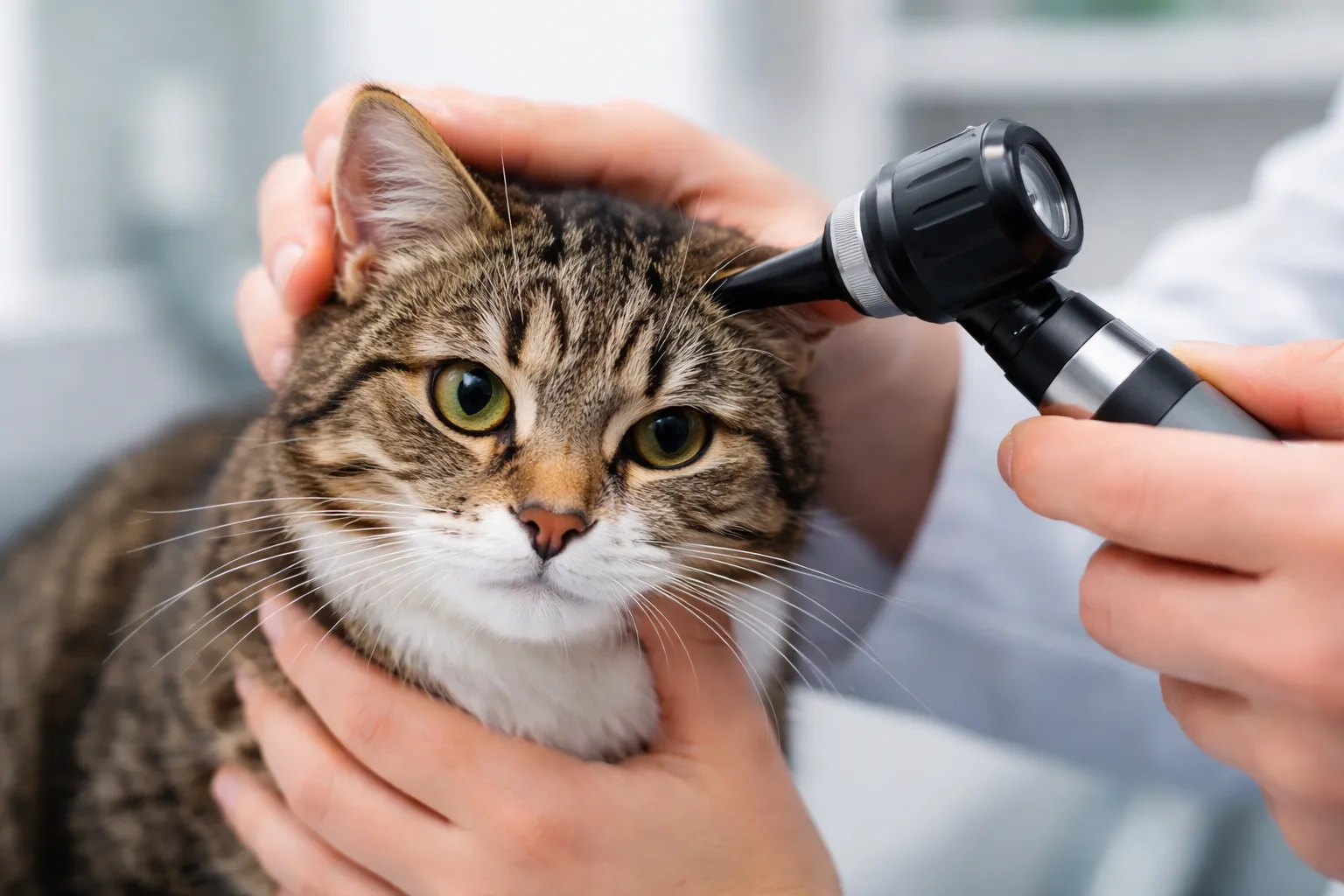
Ear infections (otitis) in cats are less common than in dogs but still occur regularly, particularly in certain breeds. The infection can affect the outer ear canal (otitis externa), middle ear (otitis media), or inner ear (otitis interna). Common causes include ear mites (especially in younger cats), bacterial or yeast overgrowth, allergies, and polyps. Breeds with folded ears or narrow ear canals are predisposed. While usually not life-threatening, untreated ear infections can cause chronic pain, hearing loss, and balance problems.
Symptoms to watch for
- Head shaking or tilting to one side
- Scratching or pawing at the ears
- Dark, waxy, or smelly discharge from the ear
- Redness or swelling inside the ear flap
- Pain when the ears are touched
- Loss of balance or walking in circles (if inner ear is affected)
How is ear infections diagnosed?
| Test | Typical cost |
|---|---|
| Consultation and otoscopic ear examination | £35–£65 |
| Ear swab cytology (microscopic examination) | £30–£80 |
Treatment options and costs
Topical ear drops (antibiotic, antifungal, or anti-parasitic)
£80–£200The most common treatment, using medicated ear drops applied daily for 7–21 days depending on the type of infection. The vet may clean the ears first if there is heavy wax or discharge. Ear mite infections are usually cleared quickly with appropriate anti-parasitic treatment.
Systemic medication (for severe or recurring infections)
£100–£250Oral antibiotics or antifungals may be needed for deep or middle-ear infections that don’t respond to topical treatment alone. Anti-inflammatory medication may also be prescribed if there is significant swelling or pain.
Investigation and treatment of underlying cause
£150–£500For recurrent ear infections, further investigation is needed to identify an underlying cause such as allergies, polyps, or foreign bodies. Treatment of the root cause is essential to prevent repeated infections. Polyp removal may require surgery under general anaesthetic.
Breeds most at risk
| Breed | Risk level |
|---|---|
| Scottish Fold | High |
| Persian | High |
| Sphynx | High |
| Bengal | Moderate |
| British Shorthair | Moderate |
Does pet insurance cover ear infections?
Ear infections are covered by most pet insurance policies as a standard illness claim. Diagnosis, medication, and follow-up appointments are typically included. For recurrent ear infections, insurers may investigate whether there’s an underlying pre-existing condition. Some policies have lower claim limits for minor conditions, so check your policy excess and benefit limits. Routine ear cleaning is not covered.