
Average cost
£250–£400
Typical range
£200–£500
Species
Dog & Cat
Category
Diagnostics
Anaesthesia
Not required
How much does ultrasound cost?
Ultrasound typically costs £250–£400 in the UK, though prices can range from £200 to £500 depending on your location, the practice, and your pet's individual circumstances.
Costs are UK averages based on publicly available data. Actual prices vary by practice, location, and animal size.
What affects the price?
| Factor | Impact on cost | Example |
|---|---|---|
| Type of scan | A focused scan of one area costs less than a full abdominal survey | A quick bladder check (£200–£250) vs a full abdominal ultrasound (£350–£500) |
| Specialist referral | Scans performed by a veterinary specialist or at a referral hospital cost more | £250–£350 at your local practice vs £400–£500 at a specialist centre |
| Sedation requirement | Some pets need light sedation to lie still, adding £50–£150 | A relaxed cat scanned awake vs a wriggly puppy needing sedation |
| Location | London and the South East are typically 20–40% more expensive | £300–£500 in London vs £200–£350 in Wales |
What's included in the price?
- Ultrasound examination of the target area
- Interpretation by the veterinary surgeon
- Clipping of fur over the scan area
- Coupling gel application
- Written report of findings
- Still images saved to your pet's record
What to expect
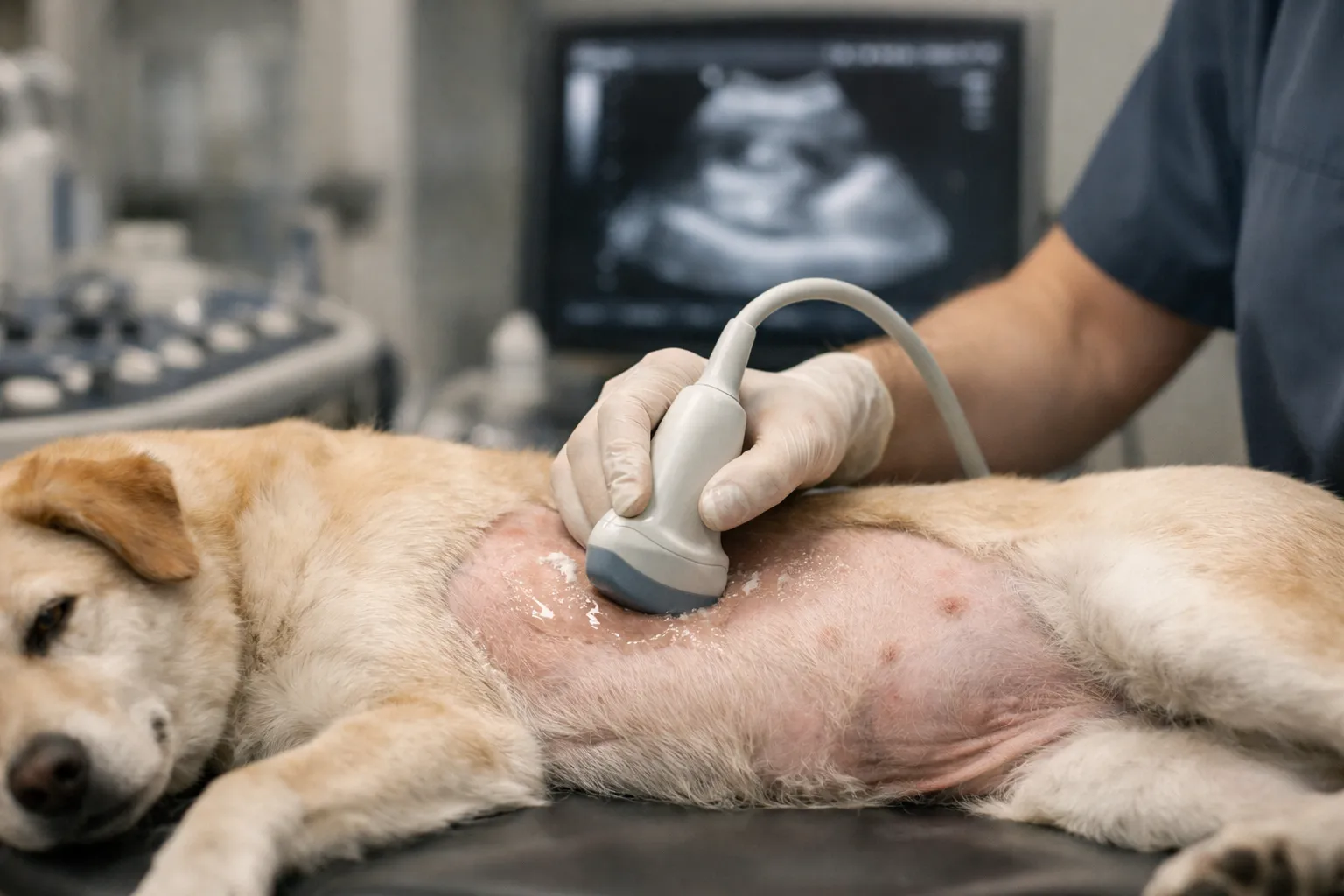
An ultrasound scan uses high-frequency sound waves to create real-time images of your pet's internal organs. It is painless, non-invasive, and does not involve any radiation. Ultrasound is especially useful for examining soft tissues such as the liver, kidneys, spleen, bladder, and heart, and can also detect fluid build-up or masses.
When is it needed? Your vet may recommend an ultrasound if blood tests reveal abnormal organ values, if your pet has unexplained vomiting, diarrhoea, or weight loss, or if a lump has been found during examination. Ultrasound is also used to confirm pregnancy and to guide fine-needle biopsies.
Recovery time: Ultrasound is completely non-invasive and your pet can go home immediately. The only visible effect is a small patch of clipped fur where the probe was placed. If sedation was used, allow 2–4 hours for full recovery.