
Average cost
£250–£400
Typical range
£150–£600
Species
Dog & Cat
Category
Dental
Anaesthesia
Required
How much does tooth extraction cost?
Tooth Extraction typically costs £250–£400 in the UK, though prices can range from £150 to £600 depending on your location, the practice, and your pet's individual circumstances.
Costs are UK averages based on publicly available data. Actual prices vary by practice, location, and animal size.
What affects the price?
| Factor | Impact on cost | Example |
|---|---|---|
| Number of teeth extracted | Each additional extraction adds £30–£100+ to the bill | A single extraction at £150–£250 vs multiple extractions at £400–£600 |
| Tooth type and difficulty | Large multi-rooted teeth (canines, carnassials) are more complex and costly to extract than small single-rooted teeth | A small incisor at £30–£50 per tooth vs a carnassial at £80–£150 per tooth |
| Pet size | Larger pets require more anaesthesia, and longer procedures cost more in theatre time | £150–£350 for a cat vs £250–£600 for a large dog |
| Dental X-rays | Intra-oral radiographs add cost but are essential for assessing root health before extraction | £50–£100 for full-mouth dental X-rays |
What's included in the price?
- Pre-anaesthetic health check
- General anaesthesia and monitoring
- Dental examination under anaesthesia
- Extraction of the affected tooth or teeth
- Pain relief and anti-inflammatory medication
- Post-operative check-up (usually at 3–5 days)
What to expect
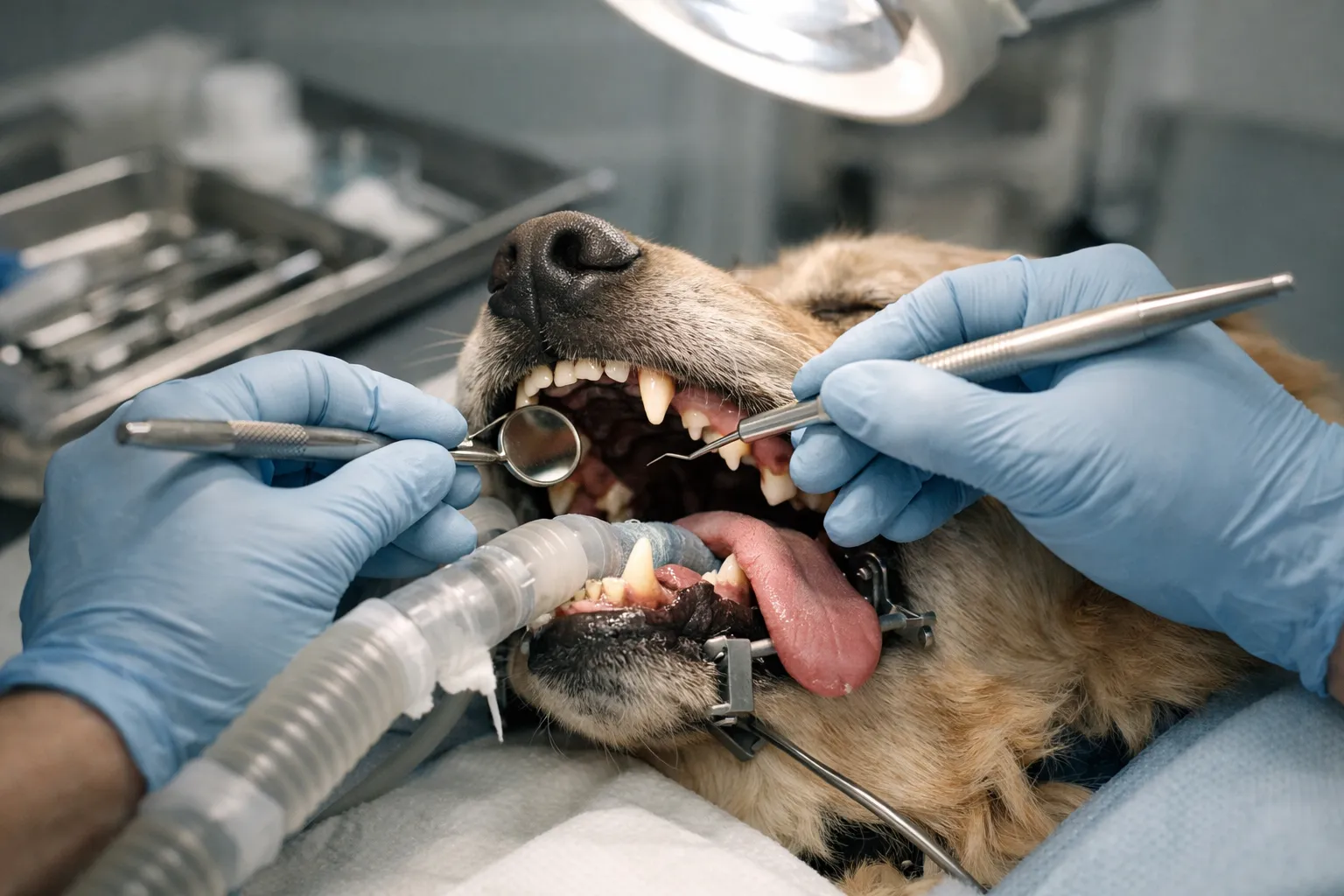
Tooth extraction is the surgical removal of one or more damaged, diseased, or painful teeth under general anaesthesia. The vet may need to elevate the gum tissue and section multi-rooted teeth before removing each root individually. The socket is often sutured closed to promote healing. Dental X-rays are used to assess the roots before and after extraction to ensure complete removal.
When is it needed? Tooth extraction is recommended when a tooth is severely fractured, has advanced periodontal disease with bone loss, is affected by a tooth root abscess, or has feline odontoclastic resorptive lesions (FORLs) in cats. Your pet may show signs such as dropping food, chewing on one side, drooling, facial swelling, or reluctance to eat hard food. Often, dental disease is discovered during a routine scale and polish.
Recovery time: Most pets eat soft food comfortably by the evening of the procedure. The extraction site heals within 10–14 days. Soft food is recommended for 5–10 days, and your vet may prescribe antibiotics if infection was present. Pets cope remarkably well even after multiple extractions — many owners report their pet seems happier and more comfortable once the painful teeth are gone.