
Average cost
£600–£1000
Typical range
£400–£1500
Species
Dog & Cat
Category
Surgery
Anaesthesia
Required
How much does lump removal cost?
Lump Removal typically costs £600–£1000 in the UK, though prices can range from £400 to £1500 depending on your location, the practice, and your pet's individual circumstances.
Costs are UK averages based on publicly available data. Actual prices vary by practice, location, and animal size.
What affects the price?
| Factor | Impact on cost | Example |
|---|---|---|
| Lump size and location | Larger or awkwardly placed lumps require longer surgery and more complex wound closure | A small skin tag removal at £400 vs a large mass on the limb at £1,200+ |
| Histopathology | Sending the lump for laboratory analysis adds £100–£250 to the bill | £600 for removal only vs £800 with histopathology report |
| Pet size | Larger pets need more anaesthesia and bigger surgical margins, increasing cost | £400–£700 for a cat vs £700–£1,500 for a large-breed dog |
| Location | London and the South East are typically 20–40% more expensive for surgery | £800–£1,500 in London vs £400–£900 in the North |
What's included in the price?
- Pre-operative health check and blood work
- General anaesthesia and monitoring
- Surgical excision of the lump
- Wound closure and dressing
- Pain relief medication
- Post-operative check-up (usually at 3 and 10 days)
What to expect
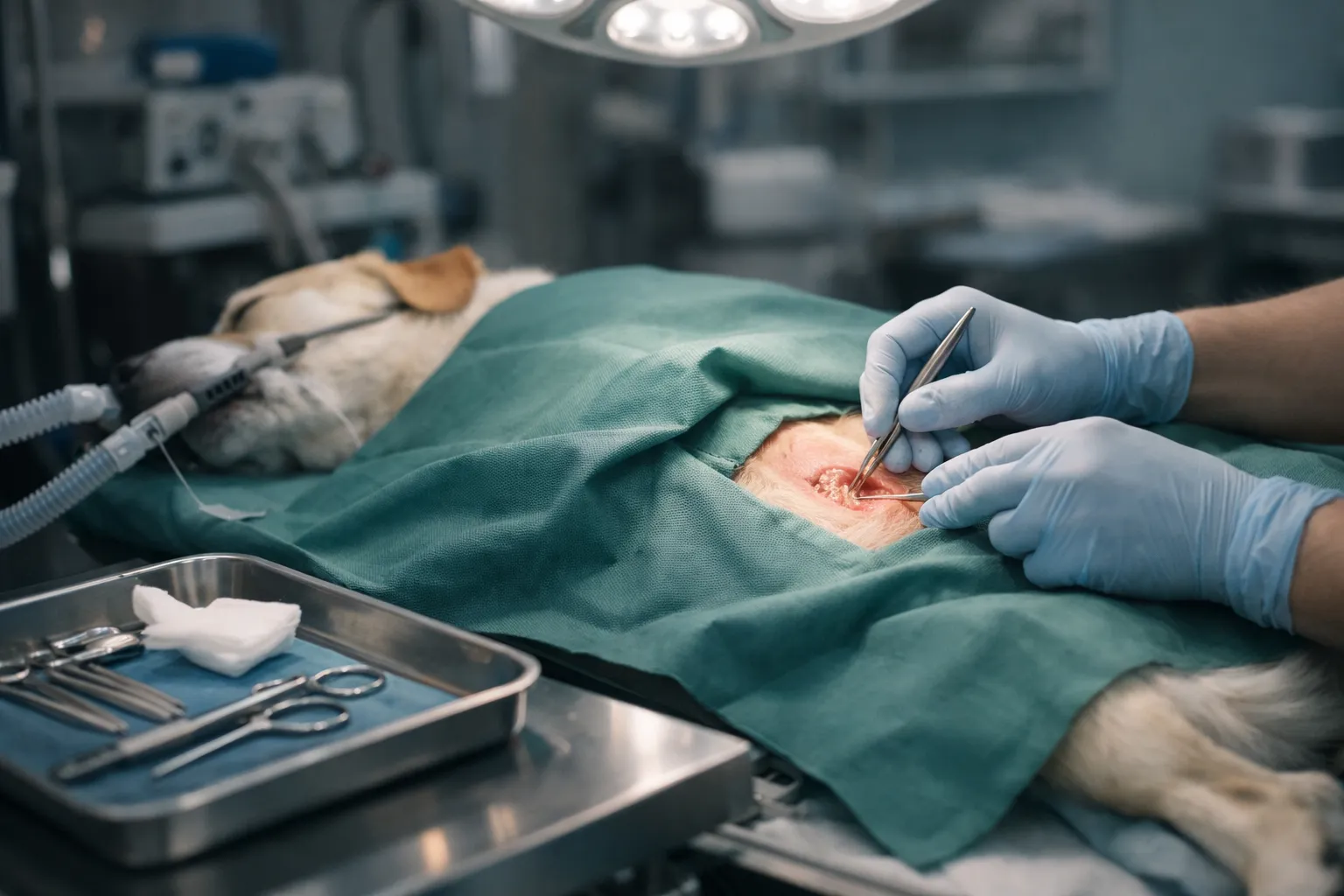
Lump removal is a surgical procedure to excise a mass or growth from your pet's skin or subcutaneous tissue. The vet removes the lump under general anaesthesia, often with a margin of healthy tissue to ensure complete removal. The excised tissue is typically sent for histopathology to determine whether the lump is benign or malignant, which guides any further treatment.
When is it needed? Your vet may recommend lump removal if a mass is growing, changing in appearance, causing discomfort, or if a fine-needle aspirate suggests it could be cancerous. Some benign lumps, such as lipomas, may be monitored rather than removed unless they are in a position that affects your pet's movement.
Recovery time: Most pets go home the same day. Restrict exercise for 10–14 days and use a buster collar to prevent licking. Stitches are usually removed at 10–14 days. Histopathology results typically take 7–10 working days.