
Average cost
£1000–£1600
Typical range
£800–£2000
Species
Dog & Cat
Category
Ongoing/Chronic
Anaesthesia
Not required
How much does diabetes management cost?
Diabetes Management typically costs £1000–£1600 in the UK, though prices can range from £800 to £2000 depending on your location, the practice, and your pet's individual circumstances.
Costs are UK averages based on publicly available data. Actual prices vary by practice, location, and animal size.
What affects the price?
| Factor | Impact on cost | Example |
|---|---|---|
| Species and insulin type | Dogs and cats use different insulin types, and newer formulations cost more | Caninsulin for dogs (£30–£50/vial) vs ProZinc for cats (£40–£70/vial) |
| Monitoring frequency | Frequent blood glucose curves and check-ups increase costs, especially in the stabilisation phase | Initial stabilisation (3–4 glucose curves at £100–£200 each) vs stable maintenance (2 checks/year at £100–£150 each) |
| Home monitoring equipment | Home glucose monitors and continuous glucose sensors reduce vet visit costs but have upfront expense | A pet glucose meter (£30–£50) plus test strips (£20–£30/month) vs Freestyle Libre sensors (£50–£60 every 14 days) |
| Complications | Diabetic ketoacidosis (DKA) or other emergencies can add thousands to annual costs | Routine management (£800–£1,500/year) vs a DKA hospitalisation episode (£1,500–£3,000 per episode) |
What's included in the price?
- Regular veterinary check-ups and blood glucose monitoring
- Insulin supply and syringes or pen needles
- Prescription diabetic diet
- Fructosamine or glucose curve testing
- Ongoing dose adjustments and telephone support
- Urine testing supplies
What to expect
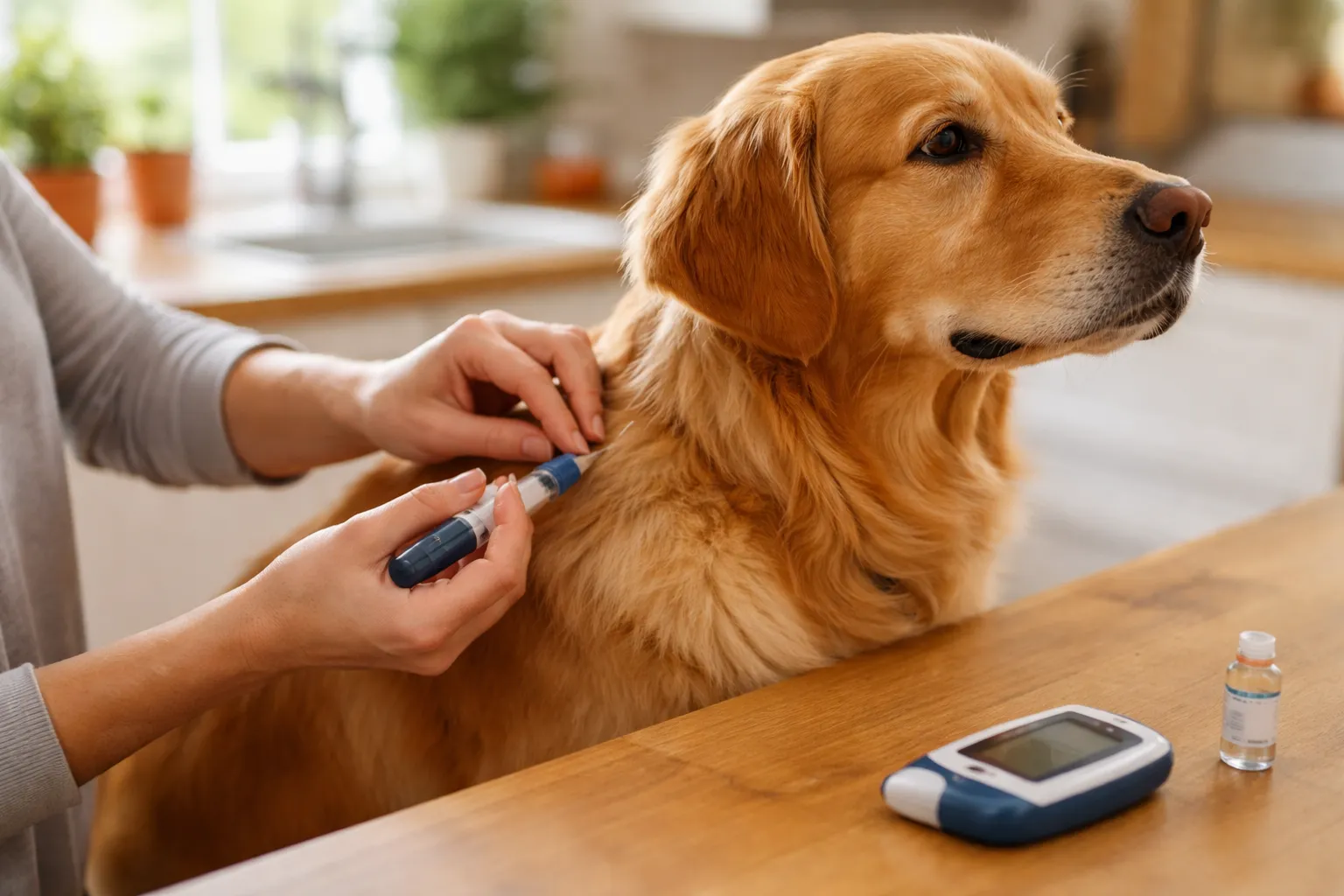
Diabetes management is the lifelong treatment of diabetes mellitus in dogs and cats. Dogs almost always require twice-daily insulin injections, while some cats can achieve remission with early, aggressive treatment. Management involves insulin therapy, a consistent feeding routine, regular blood glucose monitoring, and a prescription diet. With proper care, most diabetic pets can live comfortably for years.
When is it needed? Your pet may need diabetes management if they are drinking excessively, urinating more than usual, losing weight despite a good appetite, or becoming lethargic. Diabetes is most common in middle-aged to older pets. Certain breeds are predisposed, and overweight pets are at higher risk. Your vet can diagnose diabetes with a blood and urine test.