
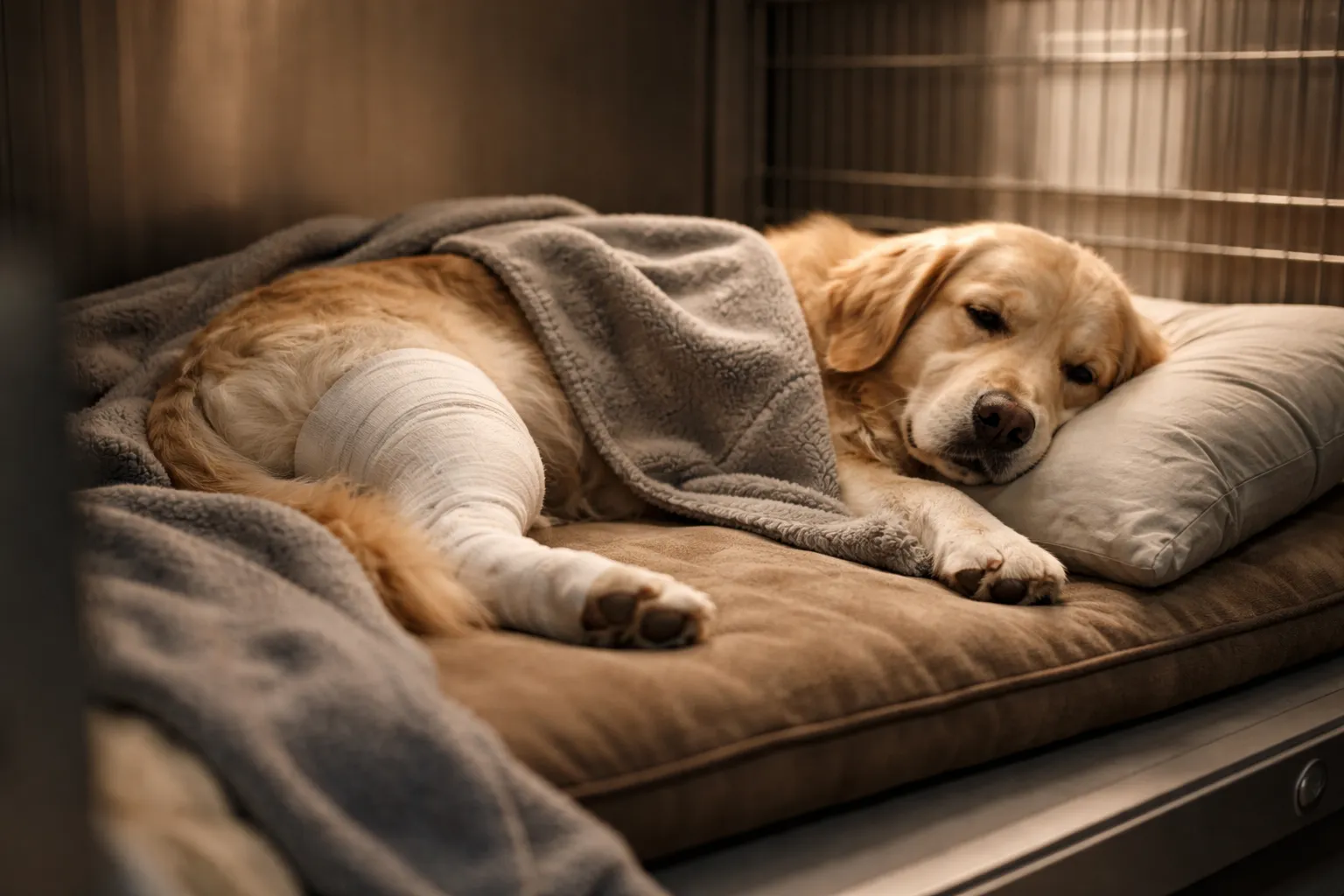
Average cost
£2000–£3000
Typical range
£1500–£5000
Species
Dog
Category
Surgery
Anaesthesia
Required
How much does cruciate ligament repair cost?
Cruciate Ligament Repair typically costs £2000–£3000 in the UK, though prices can range from £1500 to £5000 depending on your location, the practice, and your pet's individual circumstances.
Costs are UK averages based on publicly available data. Actual prices vary by practice, location, and animal size.
What affects the price?
| Factor | Impact on cost | Example |
|---|---|---|
| Surgical technique | TPLO and TTA procedures cost significantly more than lateral suture techniques | Lateral suture at £1,500–£2,500 vs TPLO at £2,500–£4,000 |
| Dog size | Larger dogs require more anaesthesia, larger implants, and longer surgery times | £1,500–£2,500 for a small dog vs £3,000–£4,000 for a giant breed |
| Specialist vs general practice | Referral to an orthopaedic specialist is more expensive but may be necessary for complex cases or large breeds | £1,500–£2,500 at a general practice vs £3,000–£4,000+ at a specialist hospital |
| Location | London and the South East are typically 20–40% more expensive | £3,000–£4,000 in London vs £2,000–£3,000 in the Midlands |
What's included in the price?
- Pre-operative examination and X-rays
- General anaesthesia and intra-operative monitoring
- Surgical repair of the cranial cruciate ligament
- Post-operative X-rays to confirm implant placement
- Pain relief and anti-inflammatory medication
- Follow-up appointments (typically at 2, 6, and 10 weeks)
What to expect
Cruciate ligament repair is an orthopaedic surgery to stabilise the stifle (knee) joint after rupture of the cranial cruciate ligament (CCL). The most common techniques in the UK are TPLO (tibial plateau levelling osteotomy), TTA (tibial tuberosity advancement), and lateral suture stabilisation. The goal is to restore comfortable, weight-bearing use of the leg and prevent further joint damage.
When is it needed? Dogs with a ruptured cruciate ligament typically present with sudden or worsening hind-leg lameness, reluctance to bear weight, and swelling around the knee. The condition can occur suddenly during exercise or develop gradually over weeks. Without surgery, the joint becomes increasingly unstable, leading to chronic pain, muscle wasting, and secondary arthritis. Around 40–60% of dogs that rupture one cruciate will eventually rupture the other.
Recovery time: Recovery takes 10–16 weeks. Strict rest and lead-only walks are essential for the first 6–8 weeks, gradually building up exercise under veterinary guidance. Hydrotherapy and physiotherapy can significantly aid recovery. Most dogs return to normal or near-normal activity within 4–6 months.