
Diagnosis cost
£100–£300
Treatment cost
£1000–£3000
Ongoing cost
N/A
Severity
Serious
Treatable
Yes
Species
Dogs
What is pyometra?
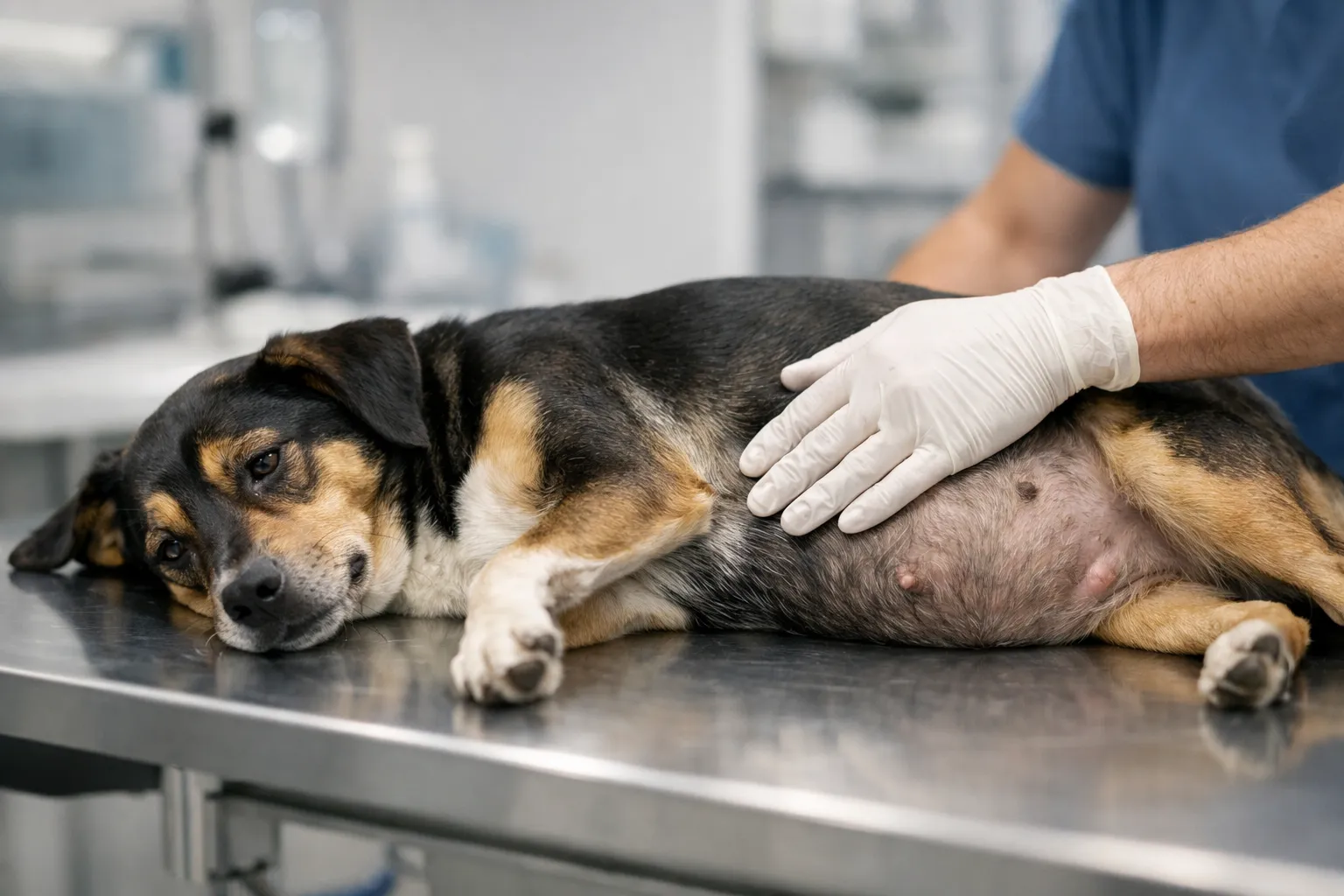
Pyometra is a life-threatening infection of the uterus (womb) that affects unspayed female dogs. It typically develops 4–8 weeks after a season, when hormonal changes cause the uterine lining to thicken and create an ideal environment for bacterial growth. Pyometra can be ‘open’ (pus drains through the cervix) or ‘closed’ (pus is trapped inside the uterus), with the closed form being more dangerous as the uterus can rupture. Without emergency surgery, pyometra is fatal.
Symptoms to watch for
- Vaginal discharge (bloody, yellow, or foul-smelling) in open pyometra
- Excessive thirst and increased urination
- Lethargy and depression
- Loss of appetite or vomiting
- Swollen or distended abdomen
- Fever or abnormally low temperature
How is pyometra diagnosed?
| Test | Typical cost |
|---|---|
| Emergency consultation and physical examination | £100–£200 |
| Abdominal ultrasound | £150–£350 |
| Blood test (infection markers, kidney and liver function) | £80–£200 |
Treatment options and costs
Emergency ovariohysterectomy (spay surgery)
£1,000–£3,000Surgical removal of the infected uterus and ovaries. This is the gold-standard treatment and is curative. The cost is significantly higher than a routine spay because the dog is often seriously unwell and may need intravenous fluids, antibiotics, and intensive post-operative monitoring.
Medical management (prostaglandin therapy)
£500–£1,500Hormone injections to open the cervix and contract the uterus to expel the pus. Only suitable for open pyometra in otherwise stable dogs where the owner wishes to breed from the dog in the future. Carries significant risk of recurrence and is not widely recommended.
Breeds most at risk
| Breed | Risk level |
|---|---|
| Golden Retriever | High |
| Cavalier King Charles Spaniel | High |
| Rottweiler | High |
| Labrador Retriever | Moderate |
| Cocker Spaniel | Moderate |
| Staffordshire Bull Terrier | Moderate |
Does pet insurance cover pyometra?
Pyometra surgery is covered by virtually all pet insurance policies, as it’s an emergency medical condition rather than an elective procedure. It’s one of the most common high-value claims for female dogs. Ensure your policy is active before symptoms develop, as it won’t be covered as a pre-existing condition. Some policies may not cover pyometra if the insurer considers it preventable through routine spaying.