
Diagnosis cost
£200–£400
Treatment cost
£1500–£5000
Ongoing cost
N/A
Severity
Serious
Treatable
Yes
Species
Dogs
What is gdv (bloat)?
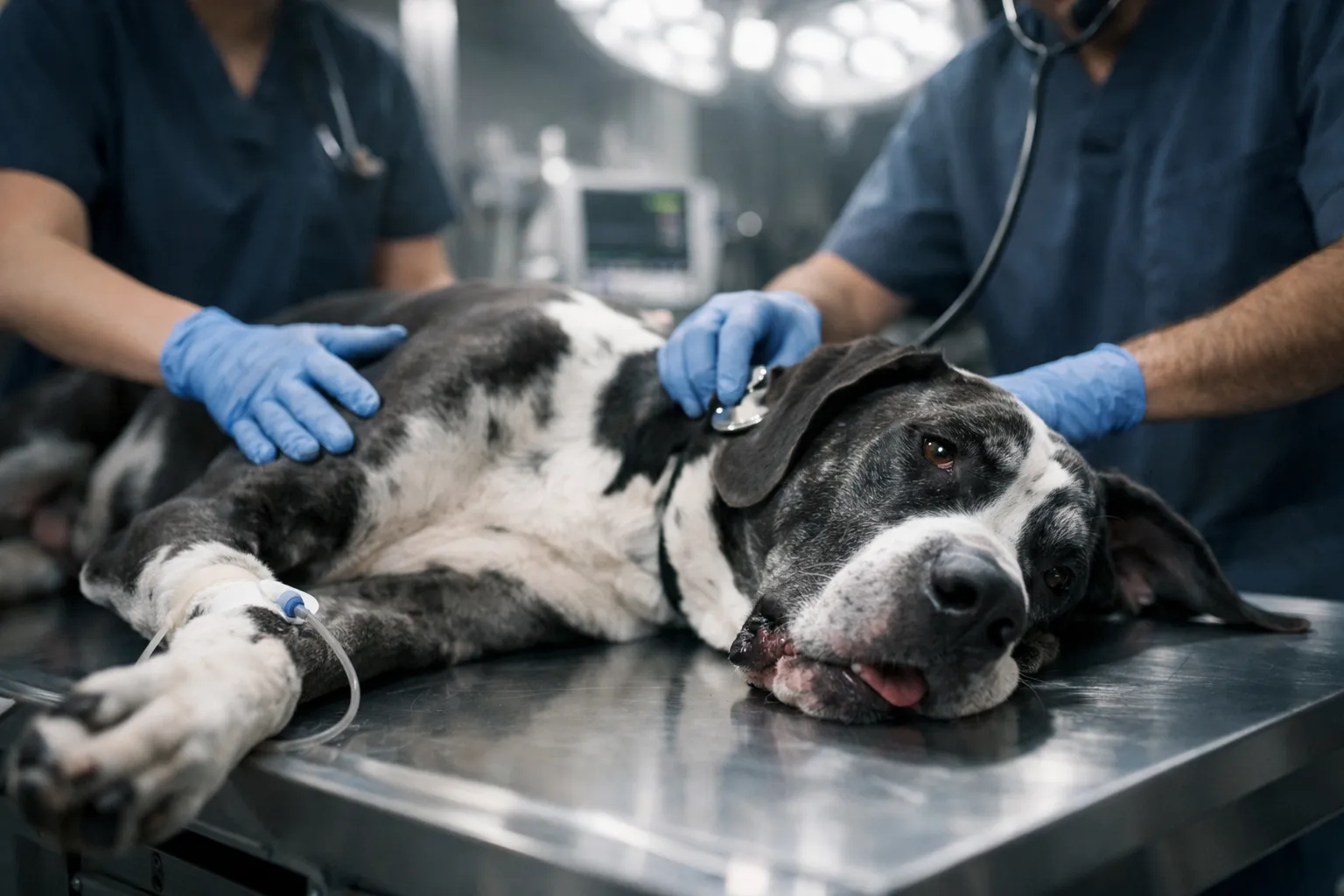
Gastric dilatation-volvulus (GDV), commonly known as bloat, is a life-threatening emergency in which the stomach fills with gas and then twists on itself, cutting off blood supply to the stomach and spleen. Without emergency surgery, GDV is almost always fatal, often within hours. It primarily affects large and giant breeds with deep, narrow chests. Even with prompt treatment, the mortality rate is around 15–30%. GDV is one of the most time-critical emergencies in veterinary medicine.
Symptoms to watch for
- Sudden, severe abdominal bloating or distension
- Unproductive retching or attempts to vomit with nothing coming up
- Restlessness, pacing, or inability to settle
- Excessive drooling
- Rapid, shallow breathing
- Pale gums or a rapid, weak pulse
- Obvious pain or distress when the abdomen is touched
- Collapse or inability to stand
How is gdv (bloat) diagnosed?
| Test | Typical cost |
|---|---|
| Emergency consultation and physical examination | £100–£250 |
| Abdominal X-rays (to confirm stomach twist) | £100–£250 |
| Blood tests (to assess organ function and shock) | £80–£150 |
Treatment options and costs
Emergency stabilisation and stomach decompression
£300–£800Immediate intravenous fluids to treat shock, pain relief, and decompression of the stomach by passing a stomach tube or inserting a needle through the abdominal wall. This is performed as an emergency procedure to stabilise the dog before surgery.
Emergency surgery (gastropexy)
£1,500–£5,000Surgery to untwist the stomach, assess tissue viability, remove any damaged tissue (including the spleen if necessary), and permanently stitch the stomach to the body wall (gastropexy) to prevent recurrence. This is the definitive treatment and must be performed as an emergency. Out-of-hours surgery at referral centres is at the higher end of the cost range.
Prophylactic gastropexy (preventative)
£500–£1,500An elective procedure to stitch the stomach to the abdominal wall before GDV occurs. Often performed at the time of neutering in high-risk breeds. Does not prevent bloat (gas accumulation) but prevents the life-threatening twist. Increasingly recommended for deep-chested breeds. Can be performed laparoscopically to reduce recovery time.
Breeds most at risk
| Breed | Risk level |
|---|---|
| German Shepherd | High |
| Labrador Retriever | Moderate |
| Golden Retriever | Moderate |
| Rottweiler | Moderate |
| Husky | Moderate |
| Springer Spaniel | Low |
Does pet insurance cover gdv (bloat)?
GDV emergency treatment is covered by virtually all pet insurance policies, including accident-only and time-limited plans, as it is classified as an emergency. Total claims for GDV surgery can range from £2,000 to over £7,000, particularly if out-of-hours emergency care and post-operative intensive care are needed. Prophylactic gastropexy is not always covered, as some insurers consider it a preventative procedure. Given the potentially fatal nature of GDV and the high cost of emergency surgery, insurance is strongly recommended for all large and giant breed dogs.