
Diagnosis cost
£300–£700
Treatment cost
£1000–£3000
Ongoing cost
£50–£150 per month
Severity
Moderate
Treatable
Manageable
Species
Dogs
What is cushing’s disease?
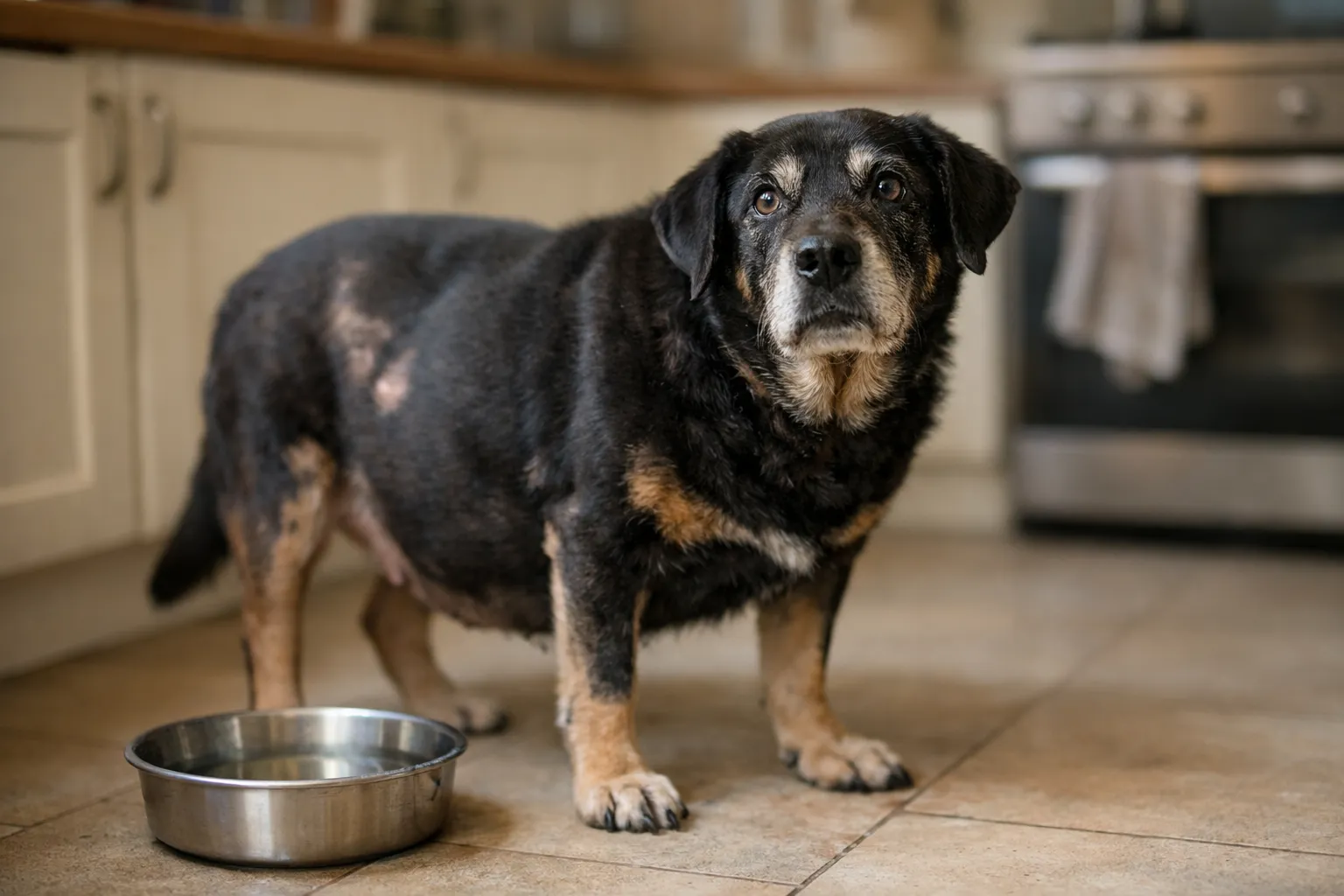
Cushing’s disease (hyperadrenocorticism) occurs when a dog’s body produces too much cortisol, a stress hormone made by the adrenal glands. The most common cause is a small, benign tumour on the pituitary gland in the brain, which overdrives cortisol production. Less commonly, a tumour on one of the adrenal glands is responsible. Cushing’s typically affects middle-aged to older dogs and can be tricky to diagnose because its symptoms overlap with many other conditions.
Symptoms to watch for
- Excessive drinking and urination
- Increased appetite and begging for food
- Pot-bellied appearance
- Hair loss, particularly on the body and flanks
- Thin, fragile skin that bruises easily
- Panting more than usual
- Lethargy and muscle weakness
- Recurring skin or urinary tract infections
How is cushing’s disease diagnosed?
| Test | Typical cost |
|---|---|
| ACTH stimulation test or low-dose dexamethasone suppression test | £150–£350 |
| Full blood panel and urinalysis | £100–£200 |
| Abdominal ultrasound (to assess adrenal glands) | £150–£300 |
Treatment options and costs
Medical management with trilostane
£50–£150 per month ongoingTrilostane (Vetoryl) is the standard medical treatment, given daily to suppress cortisol production. Regular blood tests (ACTH stimulation tests) are needed to monitor levels and adjust the dose, especially in the first few months. Most dogs show significant improvement within 2–4 weeks of starting treatment.
Adrenalectomy (surgical removal of adrenal tumour)
£2,000–£3,000If Cushing’s is caused by an adrenal gland tumour, surgical removal may be curative. This is a major abdominal operation and carries significant risks, so it’s typically only recommended when the tumour is non-invasive and the dog is otherwise a good surgical candidate. Performed by specialist surgeons.
Initial workup and stabilisation
£500–£1,000The diagnostic process for Cushing’s disease often requires multiple blood tests and imaging to confirm the diagnosis and determine whether the pituitary or adrenal gland is responsible. This initial phase can take several weeks and involves repeated veterinary visits.
Ongoing costs
Estimated ongoing management cost
£50–£150 per month
monthly
Breeds most at risk
| Breed | Risk level |
|---|---|
| Staffordshire Bull Terrier | Moderate |
| Cockapoo | Moderate |
| Cavapoo | Moderate |
| Jack Russell Terrier | Moderate |
| Beagle | Moderate |
| Dachshund | Moderate |
Does pet insurance cover cushing’s disease?
Cushing’s disease is covered by lifetime pet insurance policies provided it develops after the policy start date. Because the condition requires ongoing medication (trilostane is not cheap) and regular blood monitoring, a lifetime policy is strongly recommended. Annual medication and monitoring costs can reach £1,000–£2,500 per year. Time-limited policies will stop covering the condition after 12 months, which could leave you facing significant ongoing costs. Check that your policy’s annual benefit limit is adequate for both the initial diagnostic workup and long-term management.