
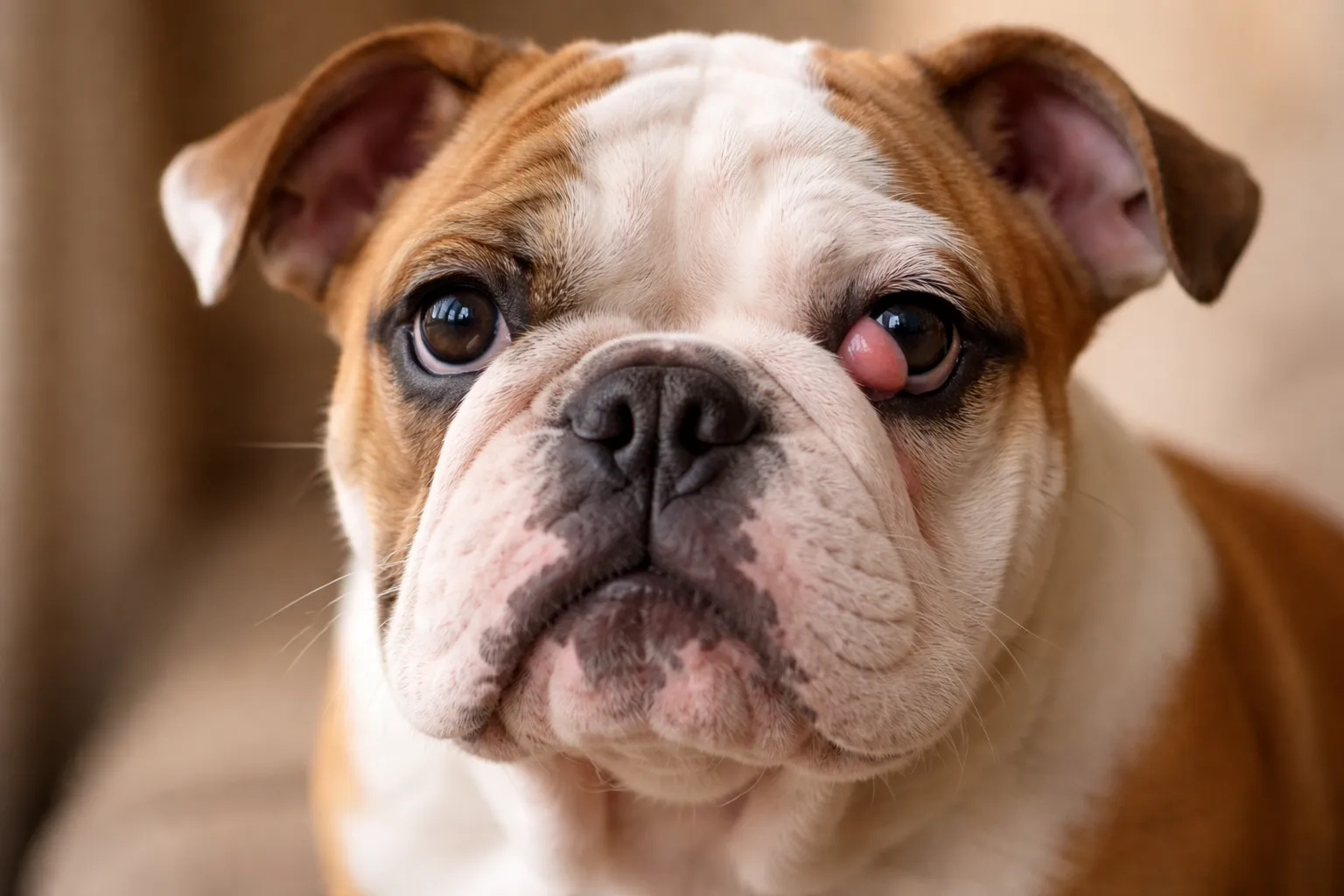
Diagnosis cost
£50–£100
Treatment cost
£300–£1000
Ongoing cost
N/A
Severity
Mild
Treatable
Yes
Species
Dogs
What is cherry eye?
Cherry eye is a condition where the gland of the third eyelid (nictitating membrane) prolapses, causing a red, fleshy mass to protrude from the inner corner of the eye. It is most common in young dogs, typically appearing before 2 years of age, and is particularly prevalent in brachycephalic (flat-faced) breeds. While cherry eye itself is not painful, the exposed gland can become irritated and inflamed, and if left untreated it can lead to reduced tear production and dry eye (keratoconjunctivitis sicca) later in life. Surgical correction is the recommended treatment.
Symptoms to watch for
- Red or pink fleshy lump visible in the inner corner of the eye
- Swelling that may come and go initially before becoming permanent
- Excessive tearing or watery discharge from the affected eye
- Pawing or rubbing at the eye
- Mild redness or irritation of the conjunctiva
- Possible occurrence in both eyes (bilateral in up to 40% of cases)
How is cherry eye diagnosed?
| Test | Typical cost |
|---|---|
| Consultation and ophthalmic examination | £35–£65 |
| Schirmer tear test (to check tear production) | £20–£40 |
Treatment options and costs
Surgical replacement (pocket technique)
£300–£800 per eyeThe most common and preferred surgical approach. The prolapsed gland is tucked back into a pocket created in the tissue of the third eyelid and sutured in place. This preserves the gland and its tear-producing function. Success rates are 80–90%, though the gland can re-prolapse in some cases and may need a second procedure.
Surgical replacement (anchoring technique)
£400–£1,000 per eyeThe gland is sutured to the periosteum (tissue covering the bone) at the rim of the eye socket to hold it permanently in place. Sometimes used when the pocket technique has failed or for larger prolapses. Also preserves the gland and its function.
Gland removal (not recommended)
£200–£500 per eyeRemoval of the prolapsed gland is no longer recommended by most veterinary ophthalmologists because the third eyelid gland produces up to 40% of the tear film. Removing it significantly increases the risk of dry eye (KCS) later in life, which requires lifelong treatment with expensive eye drops. Only considered if the gland is severely damaged or previous replacement attempts have failed.
Breeds most at risk
| Breed | Risk level |
|---|---|
| French Bulldog | High |
| Pug | High |
| Cavalier King Charles Spaniel | High |
| Cocker Spaniel | High |
| Beagle | Moderate |
| Shih Tzu | Moderate |
| Staffordshire Bull Terrier | Low |
Does pet insurance cover cherry eye?
Cherry eye surgery is covered by most pet insurance policies as it is a genuine medical condition requiring surgical correction. However, because cherry eye often appears in puppies within the first year of life, it may occur during or shortly after the typical 14-day waiting period on new policies. Some insurers exclude congenital or hereditary conditions, though cherry eye is generally classified as a developmental condition and covered. If one eye is affected first, some insurers may exclude the second eye as a pre-existing or bilateral condition. Check your policy terms carefully.