
Diagnosis cost
£150–£400
Treatment cost
£200–£800
Ongoing cost
£30–£80 per month
Severity
Moderate
Treatable
Manageable
Species
Cats
What is arthritis?
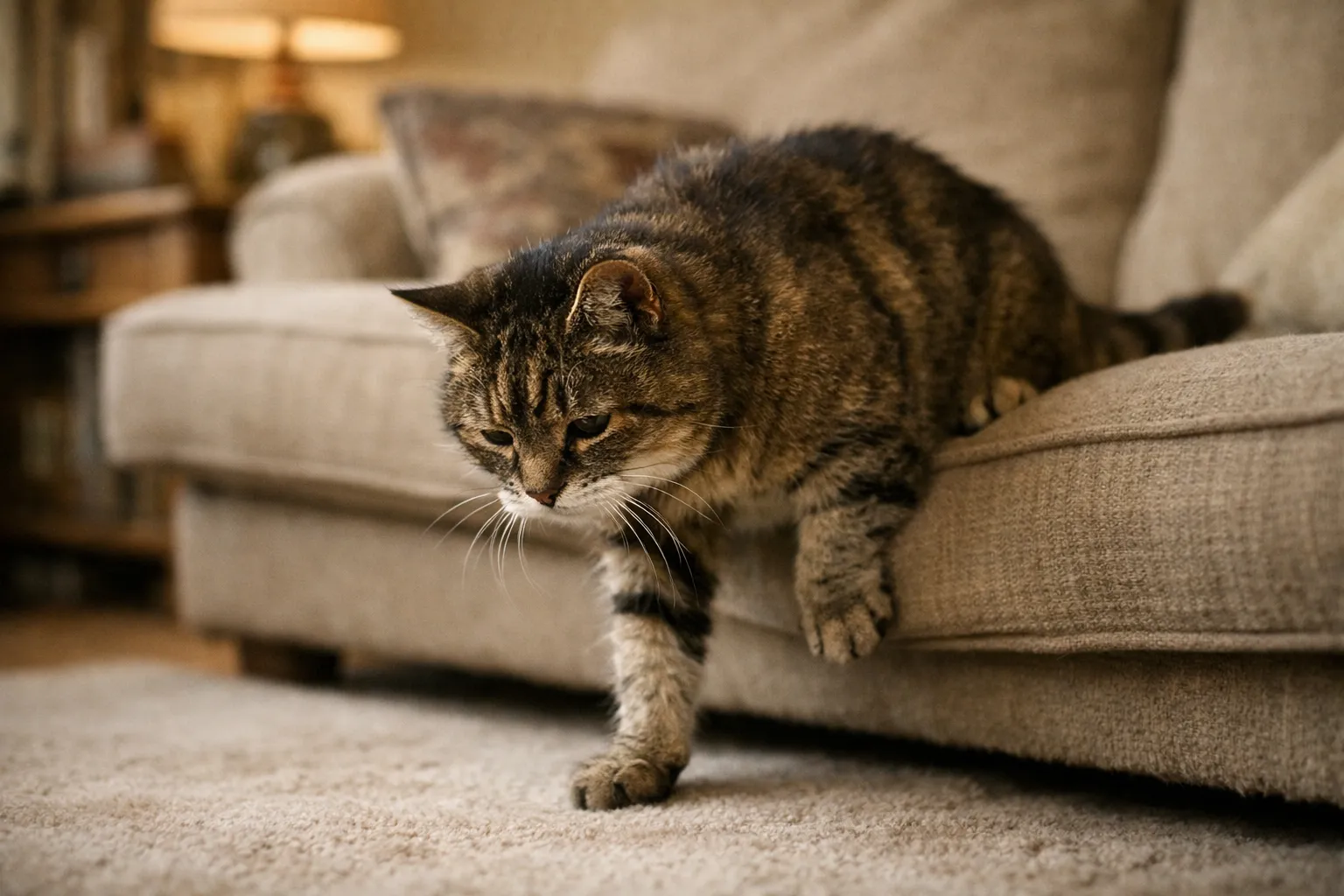
Arthritis (osteoarthritis or degenerative joint disease) is extremely common in older cats but remains vastly under-diagnosed. Studies show that up to 90% of cats over the age of 12 have radiographic evidence of arthritis, yet most owners and even vets miss the signs because cats hide pain exceptionally well. Unlike dogs, cats with arthritis rarely limp – instead, they gradually become less active and change their behaviour in subtle ways. With appropriate pain management, arthritic cats can maintain a good quality of life well into old age.
Symptoms to watch for
- Reluctance to jump up or down from furniture
- Hesitation or difficulty using the stairs
- Sleeping more and playing less
- Stiffness, especially after resting
- Reduced grooming, leading to a matted or unkempt coat
- Avoiding the litter tray (if sides are too high to climb into)
- Irritability when handled or stroked in certain areas
- Overgrown claws from reduced activity and scratching
How is arthritis diagnosed?
| Test | Typical cost |
|---|---|
| Consultation and orthopaedic examination | £35–£65 |
| X-rays (to assess joint changes) | £100–£300 |
| Blood test (to check suitability for pain medication) | £80–£200 |
Treatment options and costs
Anti-inflammatory pain medication (long-term)
£30–£80 per month ongoingNon-steroidal anti-inflammatory drugs (NSAIDs) licensed for long-term use in cats, such as meloxicam or robenacoxib. Recent approval of Solensia (frunevetmab), a monthly injection given by the vet, has transformed feline arthritis management for cats that are difficult to medicate orally. Regular blood tests are needed to monitor kidney and liver function.
Environmental modifications and weight management
£50–£200 (one-off setup)Low-sided litter trays, ramps or steps to favourite spots, heated beds, raised food and water bowls, and gentle weight loss if the cat is overweight. These simple changes can make a significant difference to comfort and mobility at minimal ongoing cost.
Joint supplements and supportive therapies
£15–£40 per month ongoingGlucosamine, chondroitin, omega-3 fatty acids, and green-lipped mussel supplements. Evidence is mixed, but many owners report improvement. Hydrotherapy and physiotherapy are available for cats at some specialist centres but are less commonly used than for dogs.
Ongoing costs
Estimated ongoing management cost
£30–£80 per month
monthly
Breeds most at risk
| Breed | Risk level |
|---|---|
| Maine Coon | High |
| Scottish Fold | High |
| Persian | Moderate |
| British Shorthair | Moderate |
| Ragdoll | Moderate |
| Bengal | Moderate |
Does pet insurance cover arthritis?
Arthritis is covered by most lifetime pet insurance policies, including diagnosis, medication, and ongoing pain management. Because it’s a chronic condition requiring lifelong treatment, a lifetime policy is essential – time-limited or maximum-benefit policies are likely to run out. The newer injectable treatment (Solensia) is generally covered but check your policy, as some insurers may require prior authorisation for specialist medications. Environmental modifications (ramps, heated beds) are not covered.