
Annual vet cost
£300–£650
Lifespan
12–17 years
Size
Large
Health risk
Medium
Species
Cats
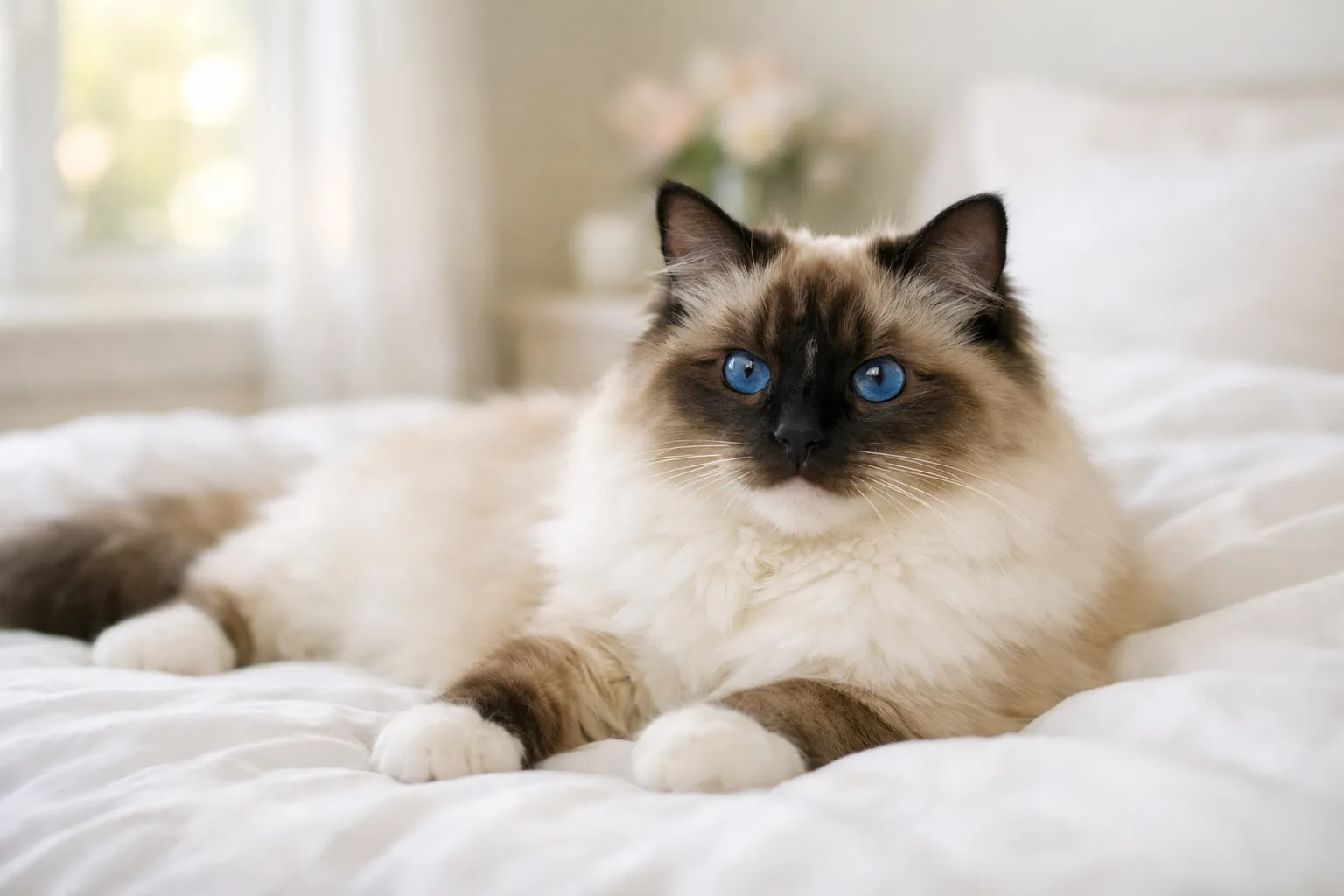
Ragdolls are one of the largest domestic cat breeds, with males often reaching 7–9 kg. Their size means slightly higher medication and anaesthesia costs compared to smaller cats. The breed's most significant health concern is hypertrophic cardiomyopathy (HCM), and a genetic test for one mutation is available — though it doesn't cover all HCM variants. Reputable breeders screen with both DNA testing and echocardiograms. Ragdolls are also predisposed to polycystic kidney disease and bladder stones, so regular blood and urine tests are worthwhile from middle age. Their semi-long coat requires regular grooming but rarely needs professional attention. Insurance premiums are moderate for a pedigree cat.
Typical vet costs for a Ragdoll
| Treatment | Average cost | Notes |
|---|---|---|
| Annual Health Check | £35–£65 | Recommended annually; heart auscultation important |
| Flea Worm Treatment | £60–£120 per year | Monthly preventive treatment |
| Dog Dental Cleaning | £150–£350 | Under general anaesthesia |
| Ultrasound | £200–£450 | Used for heart screening and kidney assessment |
| Blood Test | £80–£200 | Annual screening recommended from age 7 for kidney function |
Costs vary by location, practice, and your cat's individual needs. London and the South East are typically 20–40% higher.
Common health problems in Ragdolls
Ragdolls have a significant genetic predisposition to hypertrophic cardiomyopathy (HCM). A DNA test exists for one known mutation, but it does not detect all forms. Regular echocardiogram screening is strongly recommended.
Typical treatment cost: £800–£3,500
Polycystic kidney disease (PKD) and chronic kidney disease are both seen in Ragdolls. PKD causes fluid-filled cysts that gradually impair kidney function, often presenting in middle to old age.
Typical treatment cost: £500–£2,500 per year
Ragdolls appear to be more susceptible to calcium oxalate bladder stones than many other breeds. Surgical removal may be necessary, and dietary management helps prevent recurrence.
Typical treatment cost: £800–£2,500
Lifetime vet cost estimate
Estimated lifetime vet spend for a Ragdoll
£6,000–£16,000
Based on a 12–17 year lifespan, including routine care and common breed-specific conditions.
How to save on vet costs for your Ragdoll
- 1. Compare prices. Vet costs for the same procedure can vary by 100%+ between practices. When Pawlee launches, you'll be able to compare prices near you instantly.
- 2. Consider insurance. For Ragdolls, a lifetime policy is worth considering given the breed's predisposition to heart murmur dogs. Expect premiums of around £25–£60/month.
- 3. Stay on top of preventive care. Annual check-ups, vaccinations, and flea/worm treatments cost far less than treating conditions that develop from neglect.
- 4. Ask about payment plans. Many practices offer interest-free payment plans for larger bills. Always ask before assuming you must pay everything upfront.