
Annual vet cost
£250–£550
Lifespan
12–16 years
Size
Medium
Health risk
Medium
Species
Cats
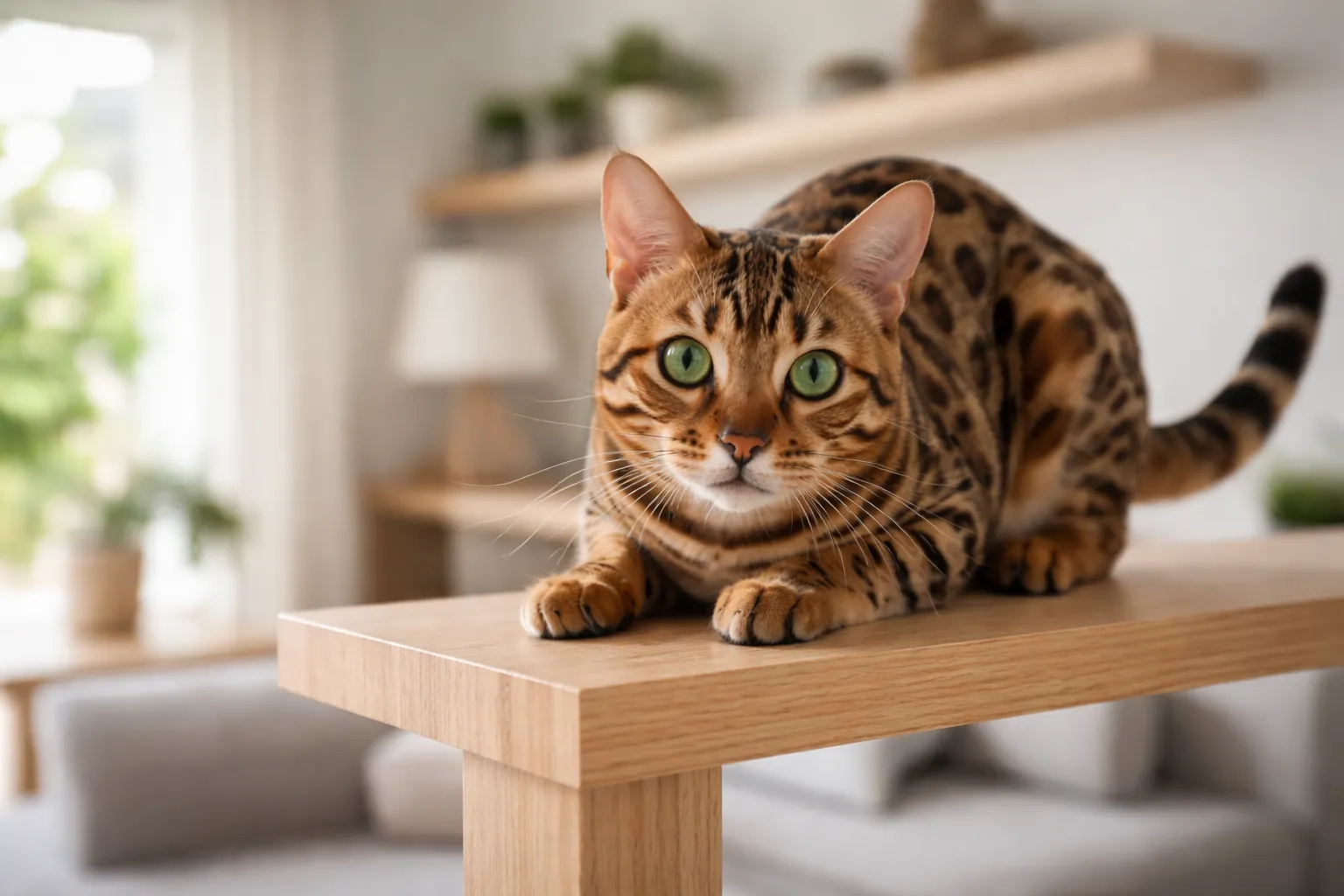
Bengals are athletic, energetic cats that tend to be healthier than many pedigree breeds, which keeps routine vet costs relatively modest. Their most significant hereditary health concerns are hypertrophic cardiomyopathy (HCM) and progressive retinal atrophy (PRA-b), both of which have genetic tests available. Reputable breeders should screen for these before mating. Bengals' high energy levels mean injuries from adventurous behaviour — such as falls or scrapes — are not uncommon, so emergency vet visits may arise. Their short, dense coat requires minimal grooming. Pet insurance premiums for Bengals are moderate, though their pedigree status means they cost more to insure than moggies. Early-generation Bengals (F1–F4) may face different insurance terms.
Typical vet costs for a Bengal
| Treatment | Average cost | Notes |
|---|---|---|
| Annual Health Check | £35–£65 | Recommended annually; heart auscultation advisable |
| Flea Worm Treatment | £60–£120 per year | Monthly preventive treatment |
| Dog Dental Cleaning | £150–£300 | Under general anaesthesia |
| Eye Surgery | £800–£2,500 | May be needed if progressive retinal atrophy is diagnosed |
| Blood Test | £80–£200 | Useful for general health screening and pre-anaesthetic checks |
Costs vary by location, practice, and your cat's individual needs. London and the South East are typically 20–40% higher.
Common health problems in Bengals
Bengals are predisposed to hypertrophic cardiomyopathy (HCM), though prevalence is lower than in some other at-risk breeds. Regular echocardiogram screening is still recommended, particularly for breeding cats.
Typical treatment cost: £800–£3,000
Progressive retinal atrophy (PRA) is a hereditary eye condition in Bengals that leads to gradual vision loss. A DNA test (Bengal PRA-b) is available, and responsible breeders screen for it.
Typical treatment cost: £1,000–£3,000
Some Bengals are prone to skin sensitivities and allergic reactions, which may present as over-grooming, hair loss, or skin irritation. Allergy testing and dietary trials may be needed.
Typical treatment cost: £200–£800 per year
Lifetime vet cost estimate
Estimated lifetime vet spend for a Bengal
£5,000–£13,000
Based on a 12–16 year lifespan, including routine care and common breed-specific conditions.
How to save on vet costs for your Bengal
- 1. Compare prices. Vet costs for the same procedure can vary by 100%+ between practices. When Pawlee launches, you'll be able to compare prices near you instantly.
- 2. Consider insurance. For Bengals, a lifetime policy is worth considering given the breed's predisposition to heart murmur dogs. Expect premiums of around £25–£60/month.
- 3. Stay on top of preventive care. Annual check-ups, vaccinations, and flea/worm treatments cost far less than treating conditions that develop from neglect.
- 4. Ask about payment plans. Many practices offer interest-free payment plans for larger bills. Always ask before assuming you must pay everything upfront.