
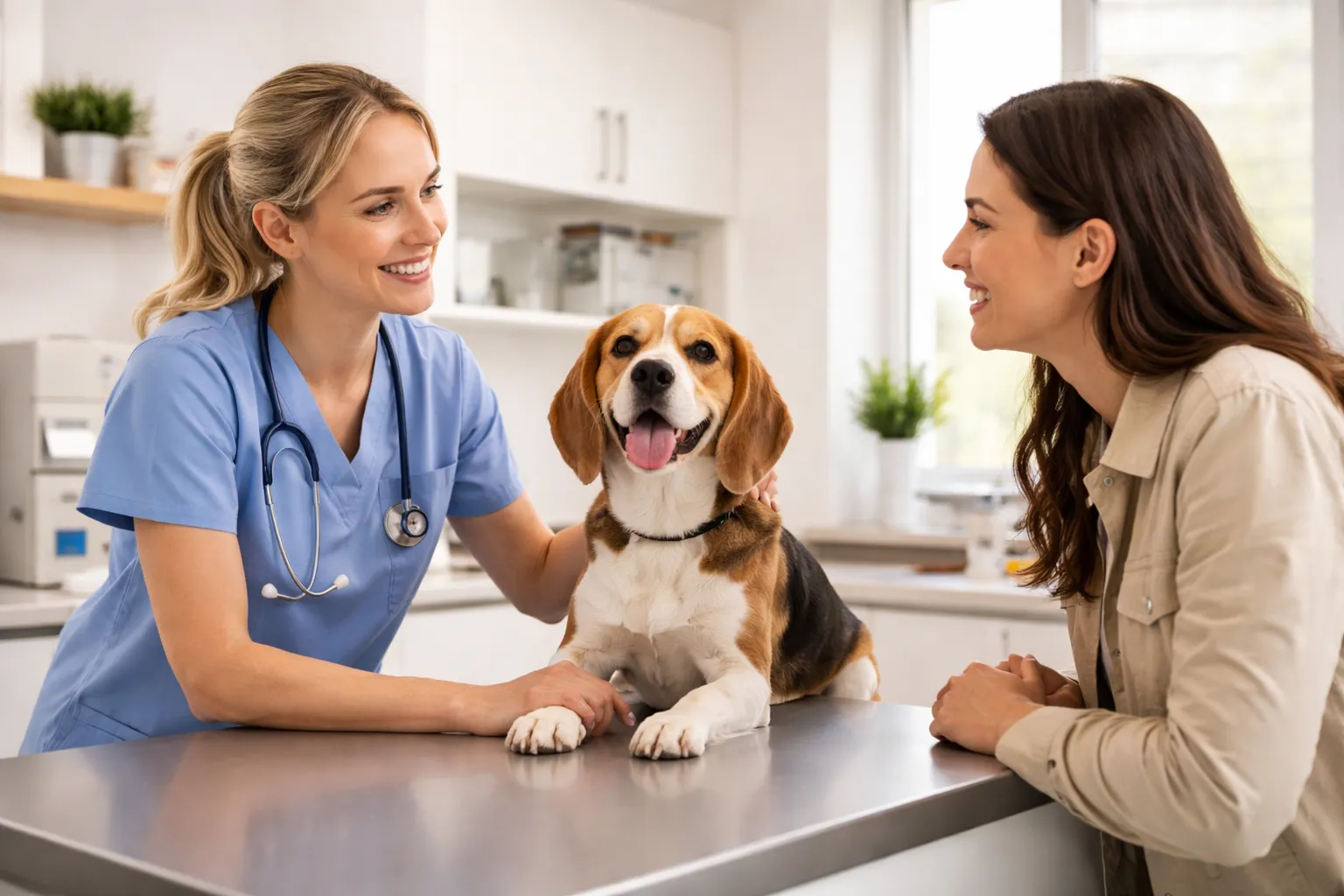
To choose a good vet in the UK, start by checking published prices, verifying RCVS registration, and visiting the practice in person before committing. Ask about out-of-hours care arrangements, compare at least three local practices on price and services, and check whether the practice is independently owned or part of a corporate chain. From late 2026, new rules mean all UK vets must publish their prices, making honest comparison easier than ever.
Choosing a vet is one of the most important decisions you will make as a pet owner. You want someone you trust, who charges fairly, and who is genuinely good at their job. This guide walks you through what to look for, what to ask, and what to watch out for.
What to look for when choosing a vet
Not all vet practices are the same. Here are the key things to check before you register.
RCVS registration
Every legitimate UK vet practice must be registered with the Royal College of Veterinary Surgeons (RCVS). This is the bare minimum. You can verify any practice at findavet.rcvs.org.uk.
Beyond basic registration, look for practices that hold the RCVS Practice Standards Scheme award. This means the practice has been voluntarily inspected and meets standards above the legal minimum. There are three levels: General Practice, Veterinary Hospital, and Emergency Clinic. A practice with this accreditation has chosen to be held to a higher standard, which is a good sign.
Pricing transparency
Before the new CMA rules take effect, pricing transparency varies hugely between practices. Some publish full price lists on their websites. Others will only tell you the cost when you call. A few will not give prices until you are already in the consultation room.
A practice that is upfront about its prices is one that respects your right to make informed decisions. If a practice is evasive about costs, that is worth noting.
From December 2026 (for large chains) and March 2027 (for all practices), every UK vet must publish their prices publicly. This will make price comparison much more straightforward. Until then, asking directly is your best option.
Range of services
Think about what your pet is likely to need, both now and in the future. Some practices are small and focused on routine care. Others offer a wider range, including imaging (X-rays, ultrasound), dental work, orthopaedic surgery, and specialist referrals in-house.
A good general practice should be able to handle:
- Routine consultations and health checks
- Vaccinations and boosters
- Neutering and spaying
- Dental care
- Minor surgery and wound treatment
- Diagnostic blood tests and basic imaging
If your pet has a specific breed-related condition or an ongoing health problem, check whether the practice has experience with it. Our breed vet cost guides cover common health issues and costs for the UK’s most popular breeds.
Out-of-hours and emergency care
This is something many pet owners overlook until they need it urgently. Ask every prospective vet: what happens if my pet needs care at 2am on a Saturday?
Some practices run their own out-of-hours service. Others use a shared emergency clinic. The quality, location, and cost of that emergency provision matters. An out-of-hours consultation can cost £200 to £400 or more, and if the emergency clinic is 45 minutes away, that is important to know in advance.
Staff qualifications and continuity
Will you see the same vet each time, or a different one at each visit? Continuity matters. A vet who knows your pet’s history can spot changes more easily and provide better ongoing care.
The CMA’s March 2026 report noted that corporate chain practices tend to have higher staff turnover than independent practices. If seeing the same vet regularly is important to you, ask about it.
Chain vets vs independent vets: what the CMA found
The question of chain versus independent is more relevant than ever. The CMA’s March 2026 vet market report provided hard data on the differences.
| Factor | Chain Vets | Independent Vets |
|---|---|---|
| Average price difference | Baseline | 16.6% lower on average |
| Market share | Over 60% of UK practices | Under 40% |
| Price transparency (pre-2026) | Varies by chain | Varies by practice |
| Staff turnover | Tends to be higher | Tends to be lower |
| Range of in-house services | Often wider | Varies widely |
| Ownership transparency | Often unclear to consumers | Usually obvious |
According to the CMA, the six largest corporate groups now own more than 60% of UK vet practices. Many of these operate under their original local names, so pet owners often do not realise their “local” vet is actually owned by a large corporation. The CMA identified this lack of ownership transparency as a problem, and new rules will require practices to disclose their ownership status.
The key finding on price: corporate chain vets charge on average 16.6% more than independent practices. That does not mean chain vets are always worse value. Some offer wider services, more advanced equipment, or more convenient opening hours. But on price alone, independent practices tend to be more competitive.
For a deeper look at this topic, see our guide to independent vs chain vets.
Questions to ask a new vet
When you visit a prospective practice, come prepared. Here are specific questions worth asking.
-
“Can you give me a full price list for common procedures?” A good practice will have this ready or be willing to prepare one. Ask about consultation fees, vaccination courses, neutering, dental cleaning, and any procedure your pet is likely to need. From late 2026, they will be required to publish these prices anyway.
-
“What does your consultation fee include?” Some practices include a basic examination in the consultation fee. Others charge separately for things like ear checks or nail clipping done during a visit. According to the CMA’s findings, consultation fees at independent practices are typically 15-25% lower than at the six largest corporate chains.
-
“What are your out-of-hours arrangements?” Find out where you would take your pet in an emergency, how far away it is, and what it costs. Ask whether the emergency service is run by the practice or an external provider.
-
“Will I see the same vet each time?” If continuity of care is important to you, ask how the practice handles appointments. Some practices let you book with a specific vet. Others assign whoever is available.
-
“Is this practice independently owned?” If it matters to you whether your money stays with a local business owner or goes to a large corporation, ask. The practice should tell you. Under the new CMA rules, they will be required to disclose their ownership.
-
“Do you offer payment plans?” Unexpected vet bills can be stressful. Some practices offer interest-free payment plans for larger bills, or work with third-party finance providers. Knowing this in advance can provide peace of mind.
-
“Can I see the facilities?” A good practice will be happy to show you around. Look for cleanliness, modern equipment, and a calm, organised environment. Pay attention to how the staff interact with animals in the waiting area.
Red flags to watch for
Not every vet practice is a good fit. Here are warning signs that a practice may not be the right choice.
Refusing to discuss prices. If a practice will not give you even a rough estimate before a consultation, that is a transparency problem. You have every right to know what you will be paying.
Pressure to buy products on the spot. Some practices push their own branded food, supplements, or flea treatments heavily during consultations. While recommendations are fine, high-pressure sales tactics are a red flag. The CMA noted concerns about practices steering owners towards products sold in-house rather than on prescription (which is often less expensive from an online pharmacy).
No clear out-of-hours plan. A practice that cannot clearly explain what happens in an emergency is not adequately prepared. Your pet deserves a vet that has a proper emergency plan.
Consistently poor reviews. Check Google reviews, but read them carefully. One or two negative reviews among dozens of positive ones is normal. A pattern of complaints about the same issue — unexpected charges, poor communication, rushing through appointments — is worth taking seriously.
Unclear ownership. If you ask whether the practice is independently owned and get a vague or evasive answer, that is not a good sign. The new CMA rules on ownership disclosure will address this, but for now, it is reasonable to expect a straight answer.
Unwillingness to provide records. If you are switching from another practice and the old practice is reluctant to transfer your pet’s records, this is both a red flag and a breach of professional standards. The RCVS requires practices to hand over records when requested.
How the new CMA rules make choosing easier
The CMA’s final report, published on 24 March 2026, introduced several changes that will directly help pet owners choose a vet more confidently.
| Change | What It Means for You | When |
|---|---|---|
| Mandatory price publication | You can see what any vet charges before visiting | Dec 2026 (chains), Mar 2027 (all) |
| Ownership transparency | You will know if a practice is part of a corporate group | From 2026/27 |
| Prescription reform | Cheaper to buy pet medicines from pharmacies and online retailers | From 2027 |
These rules remove much of the guesswork from choosing a vet. When every practice publishes its prices, you can make real comparisons. When ownership is transparent, you can make an informed choice about where your money goes.
For the full timeline and details, see our guide to the CMA vet review.
How Pawlee will help
Pawlee is being built specifically to make choosing a vet easier. Once the new transparency rules take effect and vets publish their prices, Pawlee will aggregate those prices into a single, free comparison tool.
You will be able to:
- Search by postcode to find all vet practices near you
- Compare prices side by side for common procedures like neutering, vaccinations, consultations, and dental work
- See whether a practice is independently owned or part of a corporate group
- Make an informed decision based on real, published prices rather than guesswork
Pawlee is free for pet owners and always will be. It is independent — not owned by a vet chain or an insurance company. The goal is simple: honest, transparent price comparison so you can find the best-value vet for your pet.
Join the Pawlee waitlist to be notified when the tool launches.
A step-by-step approach to choosing a vet
If you want a simple process to follow, here it is.
-
Search for local practices. Use the RCVS Find a Vet tool at findavet.rcvs.org.uk or search online. Make a shortlist of 3 to 5 practices within a reasonable distance.
-
Check prices. Call each practice or check their website for a price list. Ask for quotes on the procedures your pet is most likely to need: consultations, vaccinations, and neutering. See our guides on dog neutering costs and cat spaying costs for what to expect.
-
Check reviews. Read Google reviews for each shortlisted practice. Look for patterns, not just individual comments.
-
Visit in person. Book a basic consultation or ask for a tour. Assess the cleanliness, the staff, and how comfortable your pet seems.
-
Ask your questions. Use the list above. Pay attention to how openly and willingly the practice answers.
-
Register. Once you have chosen, register your pet. Keep the details of your other shortlisted practices in case you want to switch later — you are always free to do so.
Not sure what vet costs to expect for your pet? Browse our breed health and cost guides, treatment price guides, and condition guides.
Pawlee is a free, independent UK vet price comparison service. Compare vet prices by postcode when we launch — join the waitlist.